
Modern Business Management in the Digital Era
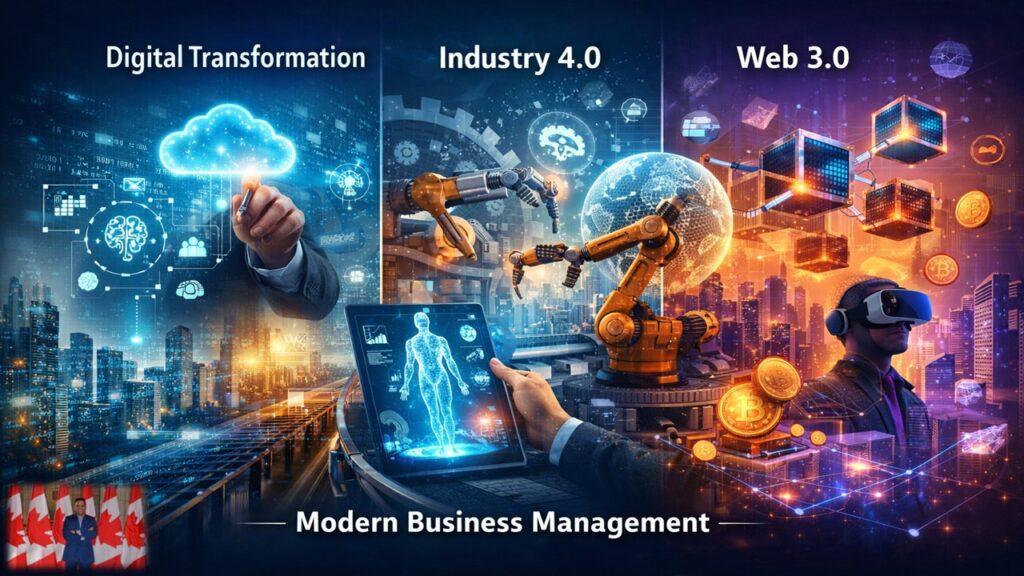
Leading with Technology, Agility, and Human Intelligence The world of business has changed more in the last 15 years than in the previous 100 years. Technology, globalization, customer expectations, and data have reshaped how organizations operate. Modern business management is no longer just about planning, organizing, and controlling. It is about adaptability, innovation, speed, and value creation. In today’s environment, success belongs to organizations that can combine technology with strong leadership and a human-centered approach. From Traditional Management to Modern Management Traditional business management focused on hierarchy, fixed processes, and long-term stability. Decisions were slow but structured. Departments worked in silos. Change happened gradually. Modern business management is different. It is: Markets now evolve rapidly. Competitors emerge overnight. Customers expect personalization and instant service. Managers must respond faster than ever before. It is no longer “big companies beating small companies.”It is “fast companies beating slow companies.” The Three Pillars Shaping Modern Business Management Modern business leadership today is influenced by three interconnected forces: These are not isolated concepts. Together, they define how value is created in the digital economy. 1. Digital Transformation: The Strategic Foundation Digital transformation is the integration of digital technology into all areas of a business to fundamentally change how it operates and delivers value to customers. It is not about installing new software.It is about redesigning how the organization creates value. The goal is to improve: Successful transformation rests on four pillars: For example, when a company moves from manual reporting to a cloud-based ERP system with real-time dashboards, it does not just digitize operations — it becomes more strategic and responsive. Digital transformation creates sustainable value for customers, employees, and partners. 2. Industry 4.0: The Operational Revolution If digital transformation defines the strategy, Industry 4.0 defines how operations become intelligent. Industry 4.0 represents the digital transformation of manufacturing and supply chains. It moves beyond automation into smart, interconnected environments. It relies on: In this model: This enables predictive maintenance, cost reduction, and operational efficiency. However, Industry 4.0 is not limited to factories. The same principles apply to healthcare, logistics, retail, energy, and finance. Modern managers must think beyond efficiency — they must think intelligence. 3. Web 3.0: The Future of Digital Ownership While Industry 4.0 transforms operations, Web 3.0 transforms digital ecosystems. Web 1.0 was “read-only.”Web 2.0 became “read and write” — social media and platforms.Web 3.0 introduces “read, write, and own.” Built on blockchain technology, Web 3.0 promotes decentralization. Instead of a few large corporations controlling user data, individuals gain ownership of their digital identity and assets. It enables: Web 3.0 also integrates AI and semantic web technologies, allowing systems to understand context, not just keywords. For modern business management, this means: This shift changes how businesses design digital strategies. How These Three Forces Connect Together, they create a new management framework: Concept Primary Focus Strategic Outcome Digital Transformation Business & Culture Strategic Agility Industry 4.0 Operations & Supply Chain Smart Production Web 3.0 Internet Infrastructure User Data Ownership Modern business management now operates at the intersection of strategy, intelligence, and decentralization. Leadership in the Digital Age Technology alone does not guarantee success. Leadership remains central. Modern leaders must: AI will not replace humans.But humans who work with AI will replace those who do not. Digital transformation is ultimately a people transformation. The key question remains: “What is in it for me?” Successful leaders align technology adoption with human motivation. Final Reflection Digital transformation, Industry 4.0, and Web 3.0 are not future concepts. They are present realities shaping modern business management. Technology is here to stay. It will influence how we live, work, and lead. In my own journey across business strategy, AI enablement, and digital ecosystems, I have seen that sustainable success comes from aligning technology with purpose. It is not about adopting every new tool — it is about strategically selecting technologies that create measurable value and empower people. Organizations that succeed will not be the biggest. They will be the fastest learners, the most adaptive, and the most intelligent in using technology to create value. The future belongs to those who combine: Modern business management is no longer about control.It is about intelligent adaptation in a rapidly changing digital world.