
Generation Alpha & Gen Z: How AI Is Rewriting Modern Business Management
The generational shift is no longer theoretical. Generation Alpha now represents 24.4% of the global population, making it the largest generation globally. Gen Z accounts for 22.9%, and Millennials 21.2%. Together, these three groups make up nearly 70% of humanity. This is not just a demographic transition. It is a transformation of how work, leadership, and organizations must function. If you are managing with a 2015 operating model, you are preparing for irrelevance. 1 – Gen Alpha: The First Fully AI-Native Generation Generation Alpha (born 2010 onward) is the first generation that: They are not “adopting” AI. They assume intelligence is embedded in systems. For modern business management, this means: They expect: If your enterprise software is slower than their smartphone, you lose credibility instantly. 2 – Gen Z: The Algorithm-Aware Workforce Gen Z is already in the workforce. They: They do not trust institutions blindly. They evaluate them. AI has shaped their mindset in two ways: They want: Modern management must recognize this shift. Control-based management models are failing with Gen Z. Trust-based, tech-enabled ecosystems are winning. 3 – Work Is Becoming Platform-Based, AI-Augmented We are moving from: Job → Role → Title → Ladder To: Skill → Project → Platform → Portfolio AI is accelerating this shift by: Gen Alpha and Gen Z are growing up in a world where: They are not seeking lifetime employment. They are seeking leverage. Modern businesses must evolve into platforms that: The “career ladder” is being replaced by the “career ecosystem.” 4 – AI Is Increasing the Value of Human Judgment Here is the paradox: The more automation expands, the more valuable human judgment becomes. AI can: But it cannot: Gen Alpha and Gen Z are entering a world where: Routine cognitive work is commoditized. The premium skills become: Modern business management must shift training away from pure execution toward judgment development. 5 – Loyalty Is Shifting from Institution to Impact Boomers were institution-loyal.Gen X was career-loyal.Millennials are value-loyal.Gen Z and Gen Alpha will be impact-loyal. If your organization cannot answer: “Why does this matter?” You will struggle to attract top young talent. Modern management must integrate: Impact is the new currency of attraction. 6 – The Leadership Shift Required With nearly 70% of the global population being digitally native generations, leadership must evolve in three dimensions: A- Technological Intelligence Leaders must understand AI, automation, data ecosystems, and digital infrastructure. B-Structural Agility Organizations must redesign workflows around AI integration — not simply add AI tools. C- Ethical Depth As AI scales influence, leaders must safeguard fairness, privacy, and human dignity. Technology without ethics destabilizes systems.Ethics without technological literacy weakens competitiveness. Modern business management requires both. 7 – What This Means for the Future The rise of Generation Alpha signals: Gen Z is already pushing organizations to change. Gen Alpha will accelerate that pressure. The future of work is not the end of structure. It is the redesign of structure around intelligence. Final Strategic Insight Generation Alpha and Gen Z are not just younger demographics. They are: Modern business management must transition from: The organizations that thrive will not be those with the longest legacy. They will be those that integrate AI responsibly, empower human judgment, and create environments where digital-native generations can build, not just work. The demographic shift is already here. The management shift must follow
Modern Business Management in the Digital Era
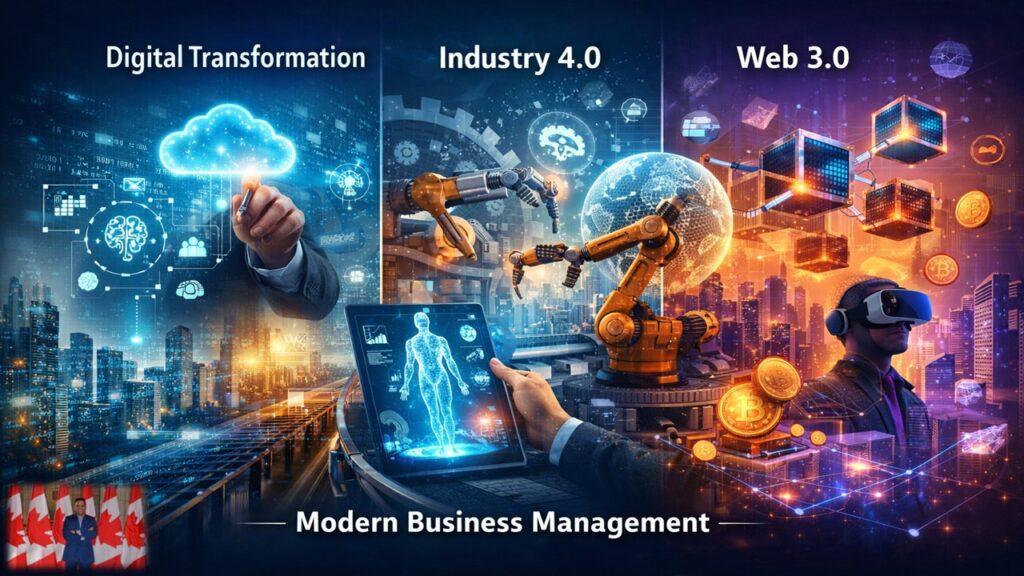
Leading with Technology, Agility, and Human Intelligence The world of business has changed more in the last 15 years than in the previous 100 years. Technology, globalization, customer expectations, and data have reshaped how organizations operate. Modern business management is no longer just about planning, organizing, and controlling. It is about adaptability, innovation, speed, and value creation. In today’s environment, success belongs to organizations that can combine technology with strong leadership and a human-centered approach. From Traditional Management to Modern Management Traditional business management focused on hierarchy, fixed processes, and long-term stability. Decisions were slow but structured. Departments worked in silos. Change happened gradually. Modern business management is different. It is: Markets now evolve rapidly. Competitors emerge overnight. Customers expect personalization and instant service. Managers must respond faster than ever before. It is no longer “big companies beating small companies.”It is “fast companies beating slow companies.” The Three Pillars Shaping Modern Business Management Modern business leadership today is influenced by three interconnected forces: These are not isolated concepts. Together, they define how value is created in the digital economy. 1. Digital Transformation: The Strategic Foundation Digital transformation is the integration of digital technology into all areas of a business to fundamentally change how it operates and delivers value to customers. It is not about installing new software.It is about redesigning how the organization creates value. The goal is to improve: Successful transformation rests on four pillars: For example, when a company moves from manual reporting to a cloud-based ERP system with real-time dashboards, it does not just digitize operations — it becomes more strategic and responsive. Digital transformation creates sustainable value for customers, employees, and partners. 2. Industry 4.0: The Operational Revolution If digital transformation defines the strategy, Industry 4.0 defines how operations become intelligent. Industry 4.0 represents the digital transformation of manufacturing and supply chains. It moves beyond automation into smart, interconnected environments. It relies on: In this model: This enables predictive maintenance, cost reduction, and operational efficiency. However, Industry 4.0 is not limited to factories. The same principles apply to healthcare, logistics, retail, energy, and finance. Modern managers must think beyond efficiency — they must think intelligence. 3. Web 3.0: The Future of Digital Ownership While Industry 4.0 transforms operations, Web 3.0 transforms digital ecosystems. Web 1.0 was “read-only.”Web 2.0 became “read and write” — social media and platforms.Web 3.0 introduces “read, write, and own.” Built on blockchain technology, Web 3.0 promotes decentralization. Instead of a few large corporations controlling user data, individuals gain ownership of their digital identity and assets. It enables: Web 3.0 also integrates AI and semantic web technologies, allowing systems to understand context, not just keywords. For modern business management, this means: This shift changes how businesses design digital strategies. How These Three Forces Connect Together, they create a new management framework: Concept Primary Focus Strategic Outcome Digital Transformation Business & Culture Strategic Agility Industry 4.0 Operations & Supply Chain Smart Production Web 3.0 Internet Infrastructure User Data Ownership Modern business management now operates at the intersection of strategy, intelligence, and decentralization. Leadership in the Digital Age Technology alone does not guarantee success. Leadership remains central. Modern leaders must: AI will not replace humans.But humans who work with AI will replace those who do not. Digital transformation is ultimately a people transformation. The key question remains: “What is in it for me?” Successful leaders align technology adoption with human motivation. Final Reflection Digital transformation, Industry 4.0, and Web 3.0 are not future concepts. They are present realities shaping modern business management. Technology is here to stay. It will influence how we live, work, and lead. In my own journey across business strategy, AI enablement, and digital ecosystems, I have seen that sustainable success comes from aligning technology with purpose. It is not about adopting every new tool — it is about strategically selecting technologies that create measurable value and empower people. Organizations that succeed will not be the biggest. They will be the fastest learners, the most adaptive, and the most intelligent in using technology to create value. The future belongs to those who combine: Modern business management is no longer about control.It is about intelligent adaptation in a rapidly changing digital world.
AI, Marketing, and the Rise of Generative Intelligence: Redefining Modern Business Management
Artificial Intelligence is no longer a future concept—it is actively reshaping how businesses operate, compete, and grow. Over the past few years, we have moved from traditional automation to Generative AI, a shift that is transforming marketing, strategy, and decision-making across organizations. AI’s Expanding Role in Marketing Marketing has become one of the fastest adopters of AI. From customer segmentation and predictive analytics to campaign optimization, AI enables marketers to move from intuition-led decisions to data-driven precision. What once took weeks—market analysis, creative testing, and performance optimization—can now happen very quickly. Generative AI takes this further by enabling content creation at scale. Text, images, videos, and even brand concepts can now be generated rapidly, allowing teams to experiment, personalize, and adapt faster than ever before. Generative AI: A Creative and Strategic Partner Generative AI is not about replacing human creativity—it is about augmenting it. In marketing, it supports idea generation, A/B testing, personalization, and storytelling. In branding, it accelerates logo concepts, design exploration, and campaign visuals. In customer engagement, it powers conversational AI, personalized messaging, and intelligent recommendations. The true value lies in how businesses combine human judgment with AI efficiency. Strategy, emotional intelligence, ethics, and long-term vision remain human strengths, while AI handles scale, speed, and pattern recognition. Impact Beyond Marketing: Business-Wide Transformation Generative AI’s influence extends well beyond marketing: Across management functions, AI enables leaders to make faster, more informed decisions while reducing operational friction. Key Considerations for Leaders As powerful as Generative AI is, it requires responsible use. Organizations must consider: AI should be viewed as a strategic capability, not just a tool. Final Thought We are entering an era where competitive advantage will increasingly depend on how well organizations integrate Generative AI into their business models—without losing the human touch. Those who learn, adapt, and lead responsibly will shape the future of marketing and management. The conversation is no longer “Should we use AI?”It is “How do we use AI wisely, creatively, and strategically?”
From Surviving to Thriving: Sustaining Innovation and Staying Competitive in a Digital World
By Kash Khan For today’s companies, digital transformation is no longer about playing catch-up—it’s about staying ahead. Having led global marketing initiatives for Yahoo!, LG Electronics, and Total across 25+ countries, and with advanced studies from IE Business School, Harvard, and Stanford, I’ve witnessed the evolution of business transformation. It’s not about surviving disruption anymore—it’s about cultivating a culture of sustainable innovation. We live in an era where technologies like AI, machine learning, AR/VR, 5G, and cloud computing aren’t just enablers—they’re the very foundation of competitiveness. Companies that thrive aren’t just deploying new tools—they’re fostering a mindset of continuous reinvention. Transformation Is a Journey, Not a Milestone According to BCG, successful digital transformations aren’t one-off projects—they’re ongoing evolutions. The most resilient companies continuously adapt by embedding innovation into their strategy, structure, and culture. Toronto: TD Bank launched an internal innovation lab, using AI and agile teams to rapidly prototype new digital services. Dubai: Emirates Airlines integrated virtual reality into pilot training and customer experience well before it became mainstream—cementing its position as a tech-forward aviation leader. Thriving Companies: McKinsey found that thriving companies take a dual focus—delivering on today’s operational needs while building tomorrow’s capabilities. This bimodal approach sustains short-term performance while nurturing long-term innovation pipelines. Build a Culture of Continuous Learning Singapore launched the SkillsFuture initiative, reskilling workers in areas like cloud computing, AI, and data to prepare for the digital-first future.In London, companies like John Lewis have embraced “test and learn” cultures, empowering employees to experiment with digital innovations that enhance the customer journey. What Drives an Innovative Culture? According to Deloitte, companies with embedded innovation cultures are 2.4x more likely to outperform their peers in revenue growth. Key drivers of this culture include: Strong leadership Cross-functional collaboration Incentives for calculated risk-taking Stay Close to the Customer New York: Peloton thrives by keeping a real-time feedback loop with its users—adjusting features, content, and services based on live data. Abu Dhabi: Etihad Aviation Group uses AI-powered sentiment analysis to refine its services and proactively resolve customer complaints before they escalate. Whether it’s personalization, automation, or predictive analytics, the companies that successfully align technology with customer-centricity are the ones that stay relevant and resilient. Innovate with Purpose Riyadh’s NEOM is a living example of the convergence of innovation, sustainability, and technology. From autonomous transport to AI-driven urban planning, NEOM isn’t just a smart city—it’s a bold statement of future-forward thinking. Purpose-Led Innovation Tools like AI and VR are only impactful when connected to a clear vision and purpose. When innovation is fueled by a meaningful mission, it drives lasting impact. Final Thought From startups in Singapore to legacy enterprises in New York, the world’s most future-ready organizations don’t just react to change—they anticipate it. They build systems that evolve, cultures that continuously learn, and strategies that stretch beyond fiscal quarters. In the digital age, survival is passive—thriving is proactive.Let’s build the future together—one innovation at a time. — Kash KhanFounder, The Black Bear | Digital Transformation Advocate | Global Marketer [/fusion_text][/fusion_builder_column][/fusion_builder_row][/fusion_builder_container]
Abu Dhabi’s AI-Native Government Strategy 2025–2027

Abu Dhabi’s Digital Strategy 2025–2027: A Bold Leap into AI-Native Governance By Kash Khan We are living in a transformative era where governments worldwide are reimagining public service delivery. Yet, Abu Dhabi has taken a decisive leap ahead. The newly unveiled Abu Dhabi Government Digital Strategy 2025–2027 is far more than a roadmap—it represents a revolution. With AED13 billion earmarked for the next three years, the emirate is positioning itself to become the world’s first AI-native government, driven by innovation, agility, and ambition. As someone who has worked with global tech leaders, traveled across 25+ countries, and graduated from IE Business School with executive education at Stanford and Harvard, I’ve encountered countless digital initiatives—few match the scale, clarity, and foresight of this one. From Smart Governance to AI-Native Leadership This isn’t Abu Dhabi’s first digital milestone. The journey from e-government to smart services laid a solid foundation. Now, the emirate is entering a new era of AI-powered governance—with a vision to: Leading consultancies like BCG and Deloitte emphasize three success pillars for digital transformation: a unified vision, robust technology, and skilled human capital. Abu Dhabi’s strategy delivers on all three: This is true digital transformation—designed not just for efficiency, but for impact. AI for All: Putting People at the Center What truly sets this strategy apart is the “AI for All” initiative. It reinforces that Abu Dhabi isn’t just transforming systems—it’s empowering people. By partnering with institutions like Mohamed bin Zayed University of AI, ATRC, G42, and other international leaders, the emirate is building a sustainable pipeline of AI talent and research excellence. This approach ensures that artificial intelligence becomes inclusive, not exclusive. Frameworks by McKinsey consistently highlight that human-centered change is the key to lasting transformation. By training both civil servants and citizens in AI, Abu Dhabi ensures its evolution is grassroots-enabled, not just top-down. TAMM 3.0 & the Pursuit of Effortless Service Innovations such as TAMM 3.0 and the Abu Dhabi Program for Effortless Customer Experience confirm that technology is being used not for digital flair—but for human value creation. Key tools in this shift include: These advancements are set to make government services 80% faster and far more intuitive. Much like how London and Singapore redefined digital governance, Abu Dhabi is now setting a new benchmark—one that combines security, sustainability, and seamless citizen experiences. Final Thought: Building the Future Today This strategy is more than governance—it’s a blueprint for national progress. By aligning purpose with execution strength and strategic partnerships, Abu Dhabi isn’t reacting to global trends—it’s leading them. The vision is clear. The architecture is sound. The momentum is real.The world should be watching—and learning. Kash KhanFounder, The Black Bear | Digital Transformation Advocate | Global Marketer
Digital Transformation Playbook for Companies and Step Ahead
Digital Transformation Playbook for Companies and Step Ahead By Kash Khan In today’s hyper-connected world, digital transformation is no longer a luxury—it’s a strategic necessity. As someone who’s worked across five continents with companies like Yahoo!, LG Electronics, Xerox, and Total, I’ve seen firsthand how digital readiness separates companies that thrive from those that fall behind. With academic credentials including an MBA, a Master’s in Economics, and a Master’s in Digital Media Marketing from IE Business School, plus executive education at Stanford and Harvard, I’ve had the opportunity to both practice and study the DNA of successful transformation. This playbook is designed to help businesses—especially those in emerging markets or just beginning their digital journey—take meaningful steps forward. Whether you’re in retail, logistics, finance, or public service, the principles remain the same. Step 1: Start with a Unified Vision McKinsey’s research shows that companies starting with a strong, shared vision are far more likely to succeed. This vision must be business-led—not just a tech wishlist—and directly tied to growth, efficiency, or customer value. Step 2: Build a Culture that Embraces Change Transformation is 70% about people and mindset, and only 30% about tech.BCG’s six success factors highlight the importance of leadership commitment and talent deployment. Change must be modeled from the top, supported by empowered middle managers and high-caliber digital champions. Step 3: Invest in the Right Technology Technologies like AI, machine learning, 5G, augmented and virtual reality, and IoT aren’t futuristic—they’re happening now. IKEA uses AR to enhance the customer experience. Domino’s Pizza transformed into a tech-first company. Reliance Jio in India used 5G to leapfrog competitors. But as BCG warns, without modular, scalable technology, even bold ideas can fail.Ensure your systems are cloud-ready, API-enabled, and future-proof. [fusion_imageframe image_id=”1433|full” aspect_ratio=”custom” custom_aspect_ratio=”49″ aspect_ratio_position=”” skip_lazy_load=”” lightbox=”no” gallery_id=”” lightbox_image=”” lightbox_image_id=”” alt=”” link=”” linktarget=”_self” hide_on_mobile=”small-visibility,medium-visibility,large-visibility” sticky_display=”normal,sticky” id=”” max_width=”” sticky_max_width=”” align_medium=”none” align_small=”none” align=”center” mask=”” custom_mask=”” mask_size=”” mask_custom_size=”” mask_position=”” mask_custom_position=”” mask_repeat=”” style_type=”” blur=”” stylecolor=”” hue=”” saturation=”” lightness=”” alpha=”” hover_type=”none” margin_top_medium=”” margin_right_medium=”” margin_bottom_medium=”” margin_left_medium=”” margin_top_small=”” margin_right_small=”” margin_bottom_small=”” margin_left_small=”” margin_top=”” margin_right=”” margin_bottom=”” margin_left=”” bordersize=”” bordercolor=”” borderradius=”” z_index=”” caption_style=”off” caption_align_medium=”none” caption_align_small=”none” caption_align=”none” caption_title=”” caption_text=”” caption_title_tag=”2″ fusion_font_family_caption_title_font=”” fusion_font_variant_caption_title_font=”” caption_title_size=”” caption_title_line_height=”” caption_title_letter_spacing=”” caption_title_transform=”” caption_title_color=”” caption_background_color=”” fusion_font_family_caption_text_font=”” fusion_font_variant_caption_text_font=”” caption_text_size=”” caption_text_line_height=”” caption_text_letter_spacing=”” caption_text_transform=”” caption_text_color=”” caption_border_color=”” caption_overlay_color=”” caption_margin_top=”” caption_margin_right=”” caption_margin_bottom=”” caption_margin_left=”” animation_type=”” animation_direction=”left” animation_speed=”0.3″ animation_offset=”” filter_hue=”0″ filter_saturation=”100″ filter_brightness=”100″ filter_contrast=”100″ filter_invert=”0″ filter_sepia=”0″ filter_opacity=”100″ filter_blur=”0″ filter_hue_hover=”0″ filter_saturation_hover=”100″ filter_brightness_hover=”100″ filter_contrast_hover=”100″ filter_invert_hover=”0″ filter_sepia_hover=”0″ filter_opacity_hover=”100″ filter_blur_hover=”0″]https://kashifwkhan.com/wp-content/uploads/2025/04/WhatsApp-Image-2025-04-07-at-01.31.03_ad57aafe.jpg[/fusion_imageframe] Step 4: Be Agile and Outcome-Driven Deloitte’s insights reinforce that agility is more than a buzzword—it’s a way of working.Break down silos, build cross-functional teams, and focus on rapid experimentation.Measure value continuously. Pivot when needed. Step 5: Focus on Data as a Strategic Asset McKinsey’s six building blocks include data and analytics as a core pillar.Data is your competitive edge—if it’s clean, accessible, and actionable. Businesses that use AI to: Understand customer behavior Forecast demand Automate back-end decisions …are gaining exponential returns. Step 6: Empower Your People Digital transformation fails without reskilling.Invest in training programs, create digital academies, and reward innovation.Encourage your teams to think digitally, act collaboratively, and iterate quickly. Step 7: Measure, Improve, and Scale Transformation isn’t a project—it’s a journey.Deloitte emphasizes the importance of continuous measurement and strategic alignment.Use KPIs tied to business outcomes such as: Cost savings Customer satisfaction Revenue growth Time-to-decision Final Thought: Lead the Change Whether you’re in Abu Dhabi, Toronto, Dubai, or Lisbon—the rules of transformation are universal.The nuances may vary, but the fundamentals are constant:✅ Clear strategy✅ Strong leadership✅ Agile teams✅ Scalable technology This is your moment to step ahead—not just to adapt to the future, but to lead it. The digital playbook is in your hands.Let’s activate it—together. — Kash KhanFounder, The Black Bear Canadian Immigration | Digital Transformation Advocate | Global Marketer
Data is Your New Oxygen: Unlocking the Power of Information for Smarter Decisions

Data is Your New Oxygen: Unlocking the Power of Information for Smarter Decisions By Kash Khan If digital transformation were a living organism, data would be its oxygen. With global experience spanning Yahoo!, LG Electronics, Xerox, and Total, and having studied at IE Business School, Harvard, and Stanford, I’ve learned that what truly separates good decisions from great strategy is how an organization handles data. In today’s hyperconnected world, data isn’t just an asset—it’s your competitive advantage. The Age of Intelligent Decisions We live in a time where AI, ML, IoT, and 5G generate more data in a single day than entire industries did in a year a decade ago. But raw data alone doesn’t drive impact—actionable data does. The Data Advantage According to McKinsey, companies that are data-driven are: 23x more likely to acquire customers 19x more likely to be profitable 6x more likely to retain customers Global Best Practices in Action Toronto: Provincial healthcare systems use real-time dashboards to monitor hospital capacity and allocate resources effectively. Dubai: Emirates Airlines uses machine learning + real-time data to optimize flight routes, improving fuel efficiency and customer experience. Riyadh: SDAIA’s national data strategy centralizes public data to enable AI innovation across healthcare, education, and finance. Japan: Toyota applies predictive analytics in manufacturing to anticipate breakdowns and prevent costly downtime. Don’t Just Collect Data—Use It Intelligently As outlined by BCG, data platforms and dashboards are foundational in digital transformation—but only if the data is: Centralized Clean Accessible Governed Without proper data governance and a culture of data literacy, all you have is digital noise. Dashboards: Your Real-Time Command Center One of the most effective tools in this journey is the real-time dashboard.Deloitte highlights that the best-performing companies use dashboards for real-time decision-making, not just reporting. Real-World Examples: Singapore’s Land Transport Authority (LTA) uses IoT + cloud dashboards to monitor traffic and commuter flow—optimizing public transit dynamically. London retailers use AI-fed dashboards to adjust prices, optimize inventory, and personalize promotions in real time. Culture Eats Data for Breakfast McKinsey cautions: Tools without talent won’t deliver results.That’s why data literacy matters.It’s not only about hiring analysts and scientists—it’s about training all teams to read, question, and act on data. Whether you’re optimizing infrastructure in Abu Dhabi or building a fintech in New York—data fluency is your greatest multiplier. Final Thought Data is no longer a back-office function—it’s a front-line superpower. The organizations that harness it will innovate faster, serve smarter, and lead stronger. So breathe deeply in this digital era. Let data guide your strategy, your decisions, and your success. — Kash KhanFounder – The Black Bear Canadian ImmigrationDigital Transformation Advocate | Global Marketer
Engaging Customers Online: Personalizing Digital Experiences Without a Big Budget
Engaging Customers Online: Personalizing Digital Experiences Without a Big Budget By Kash Khan In today’s digital economy, customer attention is the most valuable currency—and personalization is how you earn it. Having led marketing for Yahoo!, LG Electronics, Xerox, and Total across 25+ countries—and holding advanced degrees in Digital Media Marketing, Economics, and an MBA from IE Business School—I’ve witnessed a powerful truth: The smartest brands don’t just advertise—they engage. And the best part? You don’t need a massive budget to make a massive impact. You just need clarity, strategy, and smart tools. Big Impact Doesn’t Require a Big Budget From Toronto to Tokyo, small businesses are tapping into affordable platforms to create personalized, automated experiences that delight customers and drive ROI. Toronto: SMEs use tools like Shopify, Mailchimp, and ChatGPT to build automated customer journeys, send personalized emails, and suggest dynamic product recommendations. New York: DTC brands like Warby Parker scaled using clever retargeting and personalized web experiences—long before opening physical locations. Why Personalization Works: Deloitte: Personalized marketing can yield up to 8x ROI. McKinsey: 71% of consumers expect personalized experiences. 76% feel frustrated when they don’t get them. Personal is powerful—and profitable. Small Steps, Smart Tools Start Simple: Begin with user-friendly CRM platforms: HubSpot Zoho CRM Salesforce Essentials (free version) These help you: Segment your audience Track user behavior Trigger personalized messaging workflows Level Up with AI Tools: Segment and Dynamic Yield offer real-time personalization across websites, emails, and apps. In London and Singapore, retailers use these tools to automatically adjust pricing, product suggestions, and promotions—based on what each user does. Case in Point: In Riyadh, fashion startups use Instagram Shops + WhatsApp Business, enhanced with chatbots and customer insights, to deliver a 1-to-1 experience—no coding, no big budgets. Omnichannel Is the New Normal Your customer doesn’t stay in one place—and neither should your messaging. In Dubai, Carrefour UAE uses: Personalized push notifications Loyalty rewards App-based promotions Smart in-store shopping carts + QR codes McKinsey recommends mapping the entire customer journey, then layering in automation where it enhances, not replaces, human connection. Pro Tip: Combine AI-powered chat with live agents to deliver fast answers and authentic empathy. The Power of Story + Tech In Tokyo, Shiseido uses AR filters so users can virtually try makeup before buying—bridging story and tech. In London, indie publishers use email automation + AI to suggest personalized articles—boosting retention and engagement. It’s not about the budget.It’s about relevance, timing, and human storytelling—powered by tech that scales. Final Thought You don’t need millions to personalize your digital experience.You need: Smart data Simple tools A mindset focused on engagement over interruption Digital transformation isn’t about being more robotic—it’s about using technology to be more human. — Kash KhanFounder – The Black Bear Canadian ImmigrationDigital Transformation Advocate | Global Marketer
Digitize What Matters: Mapping Business Goals to Smart Digital Solutions
Digitize What Matters: Mapping Business Goals to Smart Digital Solutions By Kash Khan One of the most common pitfalls in digital transformation is mistaking “more tech” for “better business.” After leading global projects with Yahoo!, LG Electronics, Xerox, and Total, and studying digital strategy at IE Business School, Harvard, and Stanford, I’ve seen one undeniable truth: Transformation doesn’t start with technology—it starts with purpose. Across innovation hubs like New York, London, Toronto, Dubai, and Abu Dhabi, companies that thrive are those who align digital tools with specific business goals—whether it’s growth, efficiency, innovation, or customer loyalty. Start with Pain Points—Not Platforms The Boston Consulting Group (BCG) emphasizes that successful transformation stems from a clear connection between business strategy and digital initiatives. Before choosing AI, cloud, or AR/VR, ask: What processes are slowing us down? Where are we losing customers or revenue? What decisions are too slow to make? McKinsey calls this mapping the customer journey and decision loops—a method that uncovers exactly where digital can add measurable value. Real-World Wins: Emirates NBD & City of Toronto Emirates NBD, a leading bank in Dubai, digitized loan applications, KYC, and client onboarding based on identified customer friction.Result: 60% reduction in wait times and a surge in satisfaction. In Toronto, the city’s AI- and IoT-powered smart traffic system syncs lights based on real-time flow.Goal: Not to just “use AI,” but to drive efficiency and sustainability—and they did. Smart Solutions for Smart Outcomes Match your business goals to the right digital tools: Improving Customer Experience?→ Deploy AI chatbots, AR try-on tools, and personalized CRMs. Boosting Operational Efficiency?→ Implement RPA, cloud-based ERPs, and IoT sensors for automation. Speeding Up Decisions?→ Use real-time dashboards, machine learning analytics, and predictive models. Empowering Your Workforce?→ Integrate VR-based training, mobile apps, and collaborative platforms. Burberry in London uses AI to personalize fashion recommendations.In New York, real estate firms offer VR walkthroughs, helping clients make faster, more confident buying decisions. Culture Must Lead the Tech Deloitte research reveals that digital strategies succeed when driven by business goals—not IT checklists. Cross-functional leadership is essential: involve marketing, operations, finance, and HR, not just the CIO. Don’t digitize everything. Digitize what matters. Final Thought From smart government systems in Abu Dhabi to AI innovation in Toronto, one thing is clear: When business goals lead and technology follows, transformation is real, impactful, and lasting. The future isn’t about chasing tech trends.It’s about solving real problems through smart, purposeful innovation. Let’s map what matters—and digitize it smartly. — Kash KhanFounder – The Black Bear Canadian ImmigrationDigital Transformation Advocate | Global Marketer
Going Live in the Cloud: Choosing Scalable and Cost-Effective Digital Infrastructure

Going Live in the Cloud: Choosing Scalable and Cost-Effective Digital Infrastructure By Kash Khan Digital transformation without the cloud is like building a skyscraper without steel. Cloud computing is the backbone of modern business agility. With over 15 years of experience at Yahoo!, LG Electronics, Xerox, and Total, and advanced studies at IE Business School, Harvard, and Stanford, I’ve seen one undeniable pattern across markets—from Toronto to Dubai, London to Singapore, Riyadh to Tokyo: The cloud is not just IT infrastructure—it’s a business accelerator. Why Cloud, and Why Now? McKinsey notes that the cloud is not only about cutting IT costs, but about unleashing speed, innovation, and resilience. Cloud-first organizations are able to: Launch new products faster Adapt to market disruptions Serve customers more efficiently Real-World Impact: Goldman Sachs (New York) cut deployment time from weeks to hours with hybrid cloud. Saudi Telecom Company (STC) used cloud to build real-time smart city systems in Riyadh. Choosing the Right Cloud Model Boston Consulting Group (BCG) outlines a simple framework for choosing your cloud strategy: Public Cloud→ Ideal for startups & SMEs needing speed and scale.Examples: AWS, Microsoft Azure, Google Cloud. Private Cloud→ Best for industries needing full control & compliance.Examples: Banking, Healthcare, Government.Case: Abu Dhabi Digital Authority (ADDA) uses private cloud for secure innovation. Hybrid Cloud→ Blends agility of cloud with control of on-premise systems.Case: Panasonic (Japan) modernized supply chains via hybrid cloud while protecting mission-critical systems. Start Small, Scale Fast Deloitte recommends the “land and expand” model: Begin with non-critical systems like HR or finance. Prove ROI and operational benefits. Scale across departments—adding customer services, analytics, and AI. Success Story: Etisalat UAE began small, then scaled cloud across B2B services—transforming retail, public safety, and logistics sectors through powerful, scalable infrastructure. Cloud + Emerging Tech = Real Business Value The cloud is only the beginning. Its true potential is unlocked when combined with: AI/ML→ Predictive analytics, personalization IoT→ Real-time monitoring, connected operations AR/VR→ Virtual training, product visualization 5G→ Ultra-low latency, real-time data flows Examples in Action: GovTech Singapore: Cloud + AI for real-time public health insights during COVID-19 ASOS (London): Cloud-based AI for fashion personalization Toronto: City-wide IoT + cloud systems for energy, waste, and urban planning Final Thought “Cloud is not the destination—it’s the launchpad.” — Deloitte Cloud adoption is no longer optional—it’s strategic. Whether you’re scaling a fintech in Dubai or optimizing manufacturing in Japan, your success depends on your cloud-first mindset. Now is the time to go live. But go smart—choose the model, start lean, and build for the future. — Kash KhanFounder – The Black Bear Canadian ImmigrationDigital Transformation Advocate | Global Marketer