
Generation Alpha & Gen Z: How AI Is Rewriting Modern Business Management
The generational shift is no longer theoretical. Generation Alpha now represents 24.4% of the global population, making it the largest generation globally. Gen Z accounts for 22.9%, and Millennials 21.2%. Together, these three groups make up nearly 70% of humanity. This is not just a demographic transition. It is a transformation of how work, leadership, and organizations must function. If you are managing with a 2015 operating model, you are preparing for irrelevance. 1 – Gen Alpha: The First Fully AI-Native Generation Generation Alpha (born 2010 onward) is the first generation that: They are not “adopting” AI. They assume intelligence is embedded in systems. For modern business management, this means: They expect: If your enterprise software is slower than their smartphone, you lose credibility instantly. 2 – Gen Z: The Algorithm-Aware Workforce Gen Z is already in the workforce. They: They do not trust institutions blindly. They evaluate them. AI has shaped their mindset in two ways: They want: Modern management must recognize this shift. Control-based management models are failing with Gen Z. Trust-based, tech-enabled ecosystems are winning. 3 – Work Is Becoming Platform-Based, AI-Augmented We are moving from: Job → Role → Title → Ladder To: Skill → Project → Platform → Portfolio AI is accelerating this shift by: Gen Alpha and Gen Z are growing up in a world where: They are not seeking lifetime employment. They are seeking leverage. Modern businesses must evolve into platforms that: The “career ladder” is being replaced by the “career ecosystem.” 4 – AI Is Increasing the Value of Human Judgment Here is the paradox: The more automation expands, the more valuable human judgment becomes. AI can: But it cannot: Gen Alpha and Gen Z are entering a world where: Routine cognitive work is commoditized. The premium skills become: Modern business management must shift training away from pure execution toward judgment development. 5 – Loyalty Is Shifting from Institution to Impact Boomers were institution-loyal.Gen X was career-loyal.Millennials are value-loyal.Gen Z and Gen Alpha will be impact-loyal. If your organization cannot answer: “Why does this matter?” You will struggle to attract top young talent. Modern management must integrate: Impact is the new currency of attraction. 6 – The Leadership Shift Required With nearly 70% of the global population being digitally native generations, leadership must evolve in three dimensions: A- Technological Intelligence Leaders must understand AI, automation, data ecosystems, and digital infrastructure. B-Structural Agility Organizations must redesign workflows around AI integration — not simply add AI tools. C- Ethical Depth As AI scales influence, leaders must safeguard fairness, privacy, and human dignity. Technology without ethics destabilizes systems.Ethics without technological literacy weakens competitiveness. Modern business management requires both. 7 – What This Means for the Future The rise of Generation Alpha signals: Gen Z is already pushing organizations to change. Gen Alpha will accelerate that pressure. The future of work is not the end of structure. It is the redesign of structure around intelligence. Final Strategic Insight Generation Alpha and Gen Z are not just younger demographics. They are: Modern business management must transition from: The organizations that thrive will not be those with the longest legacy. They will be those that integrate AI responsibly, empower human judgment, and create environments where digital-native generations can build, not just work. The demographic shift is already here. The management shift must follow
Modern Business Management in the Digital Era
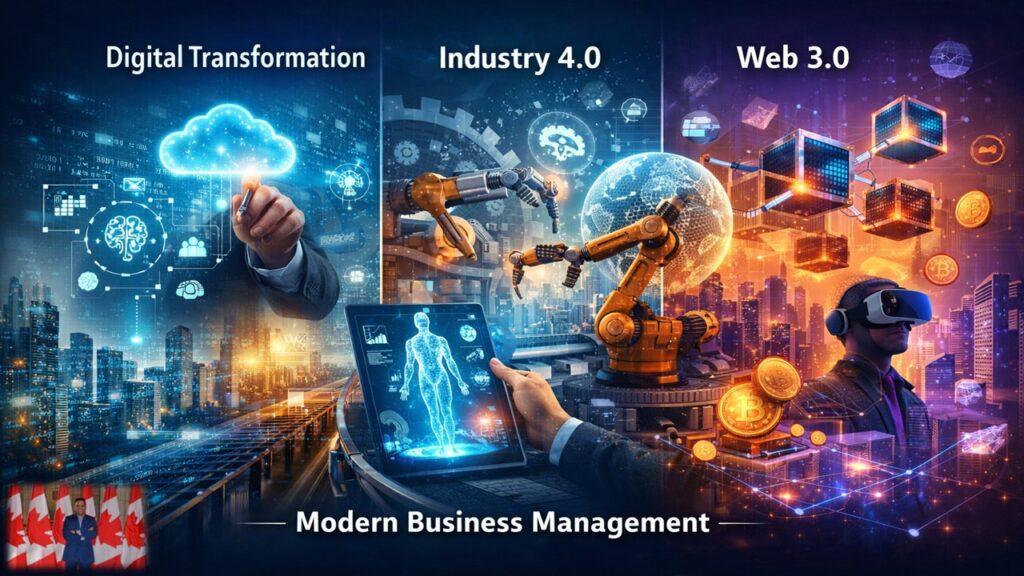
Leading with Technology, Agility, and Human Intelligence The world of business has changed more in the last 15 years than in the previous 100 years. Technology, globalization, customer expectations, and data have reshaped how organizations operate. Modern business management is no longer just about planning, organizing, and controlling. It is about adaptability, innovation, speed, and value creation. In today’s environment, success belongs to organizations that can combine technology with strong leadership and a human-centered approach. From Traditional Management to Modern Management Traditional business management focused on hierarchy, fixed processes, and long-term stability. Decisions were slow but structured. Departments worked in silos. Change happened gradually. Modern business management is different. It is: Markets now evolve rapidly. Competitors emerge overnight. Customers expect personalization and instant service. Managers must respond faster than ever before. It is no longer “big companies beating small companies.”It is “fast companies beating slow companies.” The Three Pillars Shaping Modern Business Management Modern business leadership today is influenced by three interconnected forces: These are not isolated concepts. Together, they define how value is created in the digital economy. 1. Digital Transformation: The Strategic Foundation Digital transformation is the integration of digital technology into all areas of a business to fundamentally change how it operates and delivers value to customers. It is not about installing new software.It is about redesigning how the organization creates value. The goal is to improve: Successful transformation rests on four pillars: For example, when a company moves from manual reporting to a cloud-based ERP system with real-time dashboards, it does not just digitize operations — it becomes more strategic and responsive. Digital transformation creates sustainable value for customers, employees, and partners. 2. Industry 4.0: The Operational Revolution If digital transformation defines the strategy, Industry 4.0 defines how operations become intelligent. Industry 4.0 represents the digital transformation of manufacturing and supply chains. It moves beyond automation into smart, interconnected environments. It relies on: In this model: This enables predictive maintenance, cost reduction, and operational efficiency. However, Industry 4.0 is not limited to factories. The same principles apply to healthcare, logistics, retail, energy, and finance. Modern managers must think beyond efficiency — they must think intelligence. 3. Web 3.0: The Future of Digital Ownership While Industry 4.0 transforms operations, Web 3.0 transforms digital ecosystems. Web 1.0 was “read-only.”Web 2.0 became “read and write” — social media and platforms.Web 3.0 introduces “read, write, and own.” Built on blockchain technology, Web 3.0 promotes decentralization. Instead of a few large corporations controlling user data, individuals gain ownership of their digital identity and assets. It enables: Web 3.0 also integrates AI and semantic web technologies, allowing systems to understand context, not just keywords. For modern business management, this means: This shift changes how businesses design digital strategies. How These Three Forces Connect Together, they create a new management framework: Concept Primary Focus Strategic Outcome Digital Transformation Business & Culture Strategic Agility Industry 4.0 Operations & Supply Chain Smart Production Web 3.0 Internet Infrastructure User Data Ownership Modern business management now operates at the intersection of strategy, intelligence, and decentralization. Leadership in the Digital Age Technology alone does not guarantee success. Leadership remains central. Modern leaders must: AI will not replace humans.But humans who work with AI will replace those who do not. Digital transformation is ultimately a people transformation. The key question remains: “What is in it for me?” Successful leaders align technology adoption with human motivation. Final Reflection Digital transformation, Industry 4.0, and Web 3.0 are not future concepts. They are present realities shaping modern business management. Technology is here to stay. It will influence how we live, work, and lead. In my own journey across business strategy, AI enablement, and digital ecosystems, I have seen that sustainable success comes from aligning technology with purpose. It is not about adopting every new tool — it is about strategically selecting technologies that create measurable value and empower people. Organizations that succeed will not be the biggest. They will be the fastest learners, the most adaptive, and the most intelligent in using technology to create value. The future belongs to those who combine: Modern business management is no longer about control.It is about intelligent adaptation in a rapidly changing digital world.
AI, Marketing, and the Rise of Generative Intelligence: Redefining Modern Business Management
Artificial Intelligence is no longer a future concept—it is actively reshaping how businesses operate, compete, and grow. Over the past few years, we have moved from traditional automation to Generative AI, a shift that is transforming marketing, strategy, and decision-making across organizations. AI’s Expanding Role in Marketing Marketing has become one of the fastest adopters of AI. From customer segmentation and predictive analytics to campaign optimization, AI enables marketers to move from intuition-led decisions to data-driven precision. What once took weeks—market analysis, creative testing, and performance optimization—can now happen very quickly. Generative AI takes this further by enabling content creation at scale. Text, images, videos, and even brand concepts can now be generated rapidly, allowing teams to experiment, personalize, and adapt faster than ever before. Generative AI: A Creative and Strategic Partner Generative AI is not about replacing human creativity—it is about augmenting it. In marketing, it supports idea generation, A/B testing, personalization, and storytelling. In branding, it accelerates logo concepts, design exploration, and campaign visuals. In customer engagement, it powers conversational AI, personalized messaging, and intelligent recommendations. The true value lies in how businesses combine human judgment with AI efficiency. Strategy, emotional intelligence, ethics, and long-term vision remain human strengths, while AI handles scale, speed, and pattern recognition. Impact Beyond Marketing: Business-Wide Transformation Generative AI’s influence extends well beyond marketing: Across management functions, AI enables leaders to make faster, more informed decisions while reducing operational friction. Key Considerations for Leaders As powerful as Generative AI is, it requires responsible use. Organizations must consider: AI should be viewed as a strategic capability, not just a tool. Final Thought We are entering an era where competitive advantage will increasingly depend on how well organizations integrate Generative AI into their business models—without losing the human touch. Those who learn, adapt, and lead responsibly will shape the future of marketing and management. The conversation is no longer “Should we use AI?”It is “How do we use AI wisely, creatively, and strategically?”
Engaging Customers Online: Personalizing Digital Experiences Without a Big Budget
Engaging Customers Online: Personalizing Digital Experiences Without a Big Budget By Kash Khan In today’s digital economy, customer attention is the most valuable currency—and personalization is how you earn it. Having led marketing for Yahoo!, LG Electronics, Xerox, and Total across 25+ countries—and holding advanced degrees in Digital Media Marketing, Economics, and an MBA from IE Business School—I’ve witnessed a powerful truth: The smartest brands don’t just advertise—they engage. And the best part? You don’t need a massive budget to make a massive impact. You just need clarity, strategy, and smart tools. Big Impact Doesn’t Require a Big Budget From Toronto to Tokyo, small businesses are tapping into affordable platforms to create personalized, automated experiences that delight customers and drive ROI. Toronto: SMEs use tools like Shopify, Mailchimp, and ChatGPT to build automated customer journeys, send personalized emails, and suggest dynamic product recommendations. New York: DTC brands like Warby Parker scaled using clever retargeting and personalized web experiences—long before opening physical locations. Why Personalization Works: Deloitte: Personalized marketing can yield up to 8x ROI. McKinsey: 71% of consumers expect personalized experiences. 76% feel frustrated when they don’t get them. Personal is powerful—and profitable. Small Steps, Smart Tools Start Simple: Begin with user-friendly CRM platforms: HubSpot Zoho CRM Salesforce Essentials (free version) These help you: Segment your audience Track user behavior Trigger personalized messaging workflows Level Up with AI Tools: Segment and Dynamic Yield offer real-time personalization across websites, emails, and apps. In London and Singapore, retailers use these tools to automatically adjust pricing, product suggestions, and promotions—based on what each user does. Case in Point: In Riyadh, fashion startups use Instagram Shops + WhatsApp Business, enhanced with chatbots and customer insights, to deliver a 1-to-1 experience—no coding, no big budgets. Omnichannel Is the New Normal Your customer doesn’t stay in one place—and neither should your messaging. In Dubai, Carrefour UAE uses: Personalized push notifications Loyalty rewards App-based promotions Smart in-store shopping carts + QR codes McKinsey recommends mapping the entire customer journey, then layering in automation where it enhances, not replaces, human connection. Pro Tip: Combine AI-powered chat with live agents to deliver fast answers and authentic empathy. The Power of Story + Tech In Tokyo, Shiseido uses AR filters so users can virtually try makeup before buying—bridging story and tech. In London, indie publishers use email automation + AI to suggest personalized articles—boosting retention and engagement. It’s not about the budget.It’s about relevance, timing, and human storytelling—powered by tech that scales. Final Thought You don’t need millions to personalize your digital experience.You need: Smart data Simple tools A mindset focused on engagement over interruption Digital transformation isn’t about being more robotic—it’s about using technology to be more human. — Kash KhanFounder – The Black Bear Canadian ImmigrationDigital Transformation Advocate | Global Marketer